Resource Awareness and Acceptance among the Austrian Population.
Background
Austria is heavily dependent on fossil fuels and other raw materials. This creates an additional hurdle on the path toward a sustainable future and presents a dilemma. On the one hand, a drastic reduction in greenhouse gas emissions is necessary; on the other hand, energy must remain affordable and energy sovereignty must be preserved. Moreover, the transformation can only succeed if the population stands behind it. Current studies show that knowledge about energy and raw-materials economics is insufficient. A better understanding of the matter and its challenges, though, is a prerequisite for supporting the transformation. In short, only well-informed citizens will back the necessary changes.
Project Content and Objectives
In the RAA-AT project, we aim to build a solid data foundation for educational initiatives that raise awareness and strengthen public acceptance of the necessary energy transition.
Planned Steps:
- Collect data on people’s knowledge about raw materials and geological structures.
- Identify knowledge gaps and factors that hinder/promote acceptance of measures towards energy transition.
- Analyse how raw material economics is portrayed in traditional media, social networks, and community initiatives.
- Identify national and international best practices to improve knowledge about raw materials.
- Evaluate existing educational offerings for students (ages 8–14) on the topic of raw materials – involving teachers, museums, and industrial companies.
- Examine funding mechanisms within the Research Funding Agencies (FFG) and how they enable innovative educational formats.
The resulting recommendations will provide policymakers, businesses, and educational institutions with an evidence-based foundation for effective awareness and knowledge transfer measures. The project actively supports the goals of the “Raw Materials Master Plan 2030” on the path toward a sustainable resource and energy transition.
Methodology
We investigate the rational and emotional factors that influence the acceptance of technologies essential for the energy transition. We identify knowledge gaps regarding everyday raw material needs. We also examine the role of companies and the extent to which they take social responsibility.
We use machine-assisted methods of content and discourse analysis to examine high reach media from 2015 to 2024. Building on the insights gained, we design an online survey to capture a representative cross-section of knowledge about raw materials in the energy sector and attitudes toward the energy transition. In addition, we apply established methods for investigating educational material, conduct document analyses, and carry out interviews with expert involved in existing initiatives.
Co-creative workshops are held to develop new educational formats, with two workshops focused on early childhood education and two on secondary education. We also review existing funding mechanisms that support the development of innovative educational formats (e.g., education labs) and assess their suitability as tools for knowledge transfer and skill-building.
Our findings are presented in a report containing recommendations for strengthening societal acceptance of the necessary measures for the energy transition. Significant efforts are made to reach different population groups—with a focus on students and young people—and to enhance knowledge of raw materials in the energy sector.
Partners
Funding
You want to know more? Feel free to ask!
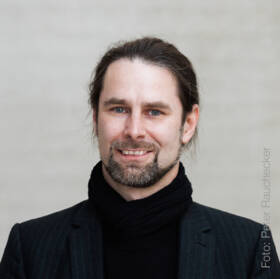
Institute for Innovation Systems
Department of Digital Business and Innovation
Maria Schramel (Zentrum für Soziale Innovation)
Franz Rauch (Uni Klagenfurt)
Markus Messerschmidt (Uni Klagenfurt)
Mira Dulle (Uni Klagenfurt)
Valerie Rodin-Pfeiffer (Energieinstitut an der JKU)
Simon Moser (Energieinstitut an der JKU)
Christoph Bauer (APA-Comm)
Edith Rehberger (APA-Comm)
Carina Engel (APA-Comm)
- Zentrum für Soziale Innovation
- APA Defacto
- JKU Johannes Kepler Universität, Energieinstitut
- Universität Klagenfurt, Institut für Unterrichts- und Schulentwicklung